Ever stood in the grocery aisle staring at a food label, totally unsure what it means? You’re not alone. Between the numbers, percentages, and long ingredient names, it can feel overwhelming.
The good news? Once you know the basics, it’s way easier than you think.
Here are some quick steps to make food labels less confusing and actually useful:
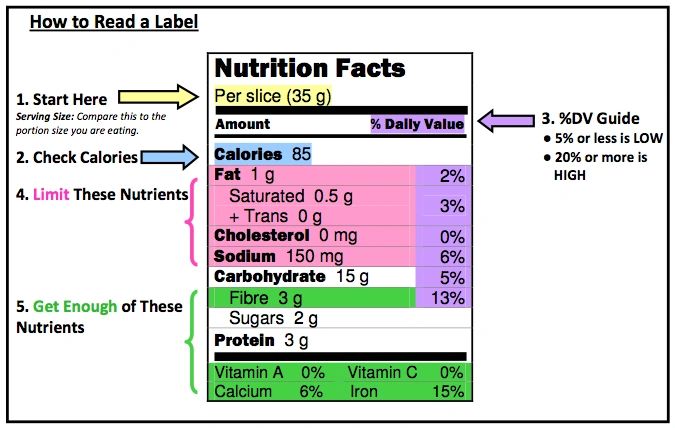
1. Start With the Serving Size
This is the first thing to check. All the numbers—calories, fat, carbs, protein—are based on the serving size.
- Example: if a bag of chips says “1 serving = 10 chips” but you eat 30, that’s 3 servings. Triple the calories, fat, and everything else.
2. Focus on the Big 3: Protein, Fiber, and Added Sugar
Instead of stressing over every number, start here:
- Protein – Helps with energy, muscle, and keeps you full. Look for at least a few grams.
- Fiber – Good for digestion and steady blood sugar. More is usually better.
- Added Sugar – Keep this low. Natural sugar from fruit or dairy is fine, but watch out for “added sugars” on the label.
3. Don’t Skip the Ingredients List
This part tells the truth about what you’re eating.
- Ingredients are listed in order—whatever comes first is what there’s most of.
- Shorter lists with words you recognize are usually better.
- Watch out for sugar hiding under names like dextrose, cane juice, or maltose.
- If it looks like a chemistry experiment, it’s probably highly processed.
Here’s a real example. Both are bread—but notice the difference between the two labels below. One is full of added unrecognizable ingredients, while the other keeps it simple and clean.


4. A Few More Quick Tips
- Check sodium – Packaged foods sneak in a lot of it. For most people, too much isn’t great. But if you’re an athlete or very active, a little more sodium actually helps performance and hydration.
- Look at fat types – Healthy fats (like nuts, olive oil, seeds) are great. Avoid trans fats, and keep saturated fats moderate.
- Calories aren’t everything – 200 calories of candy isn’t the same as 200 calories of Greek yogurt. One fuels you, one just spikes your blood sugar.
- Ignore the marketing buzzwords – Words like “natural,” “organic,” or “low-fat” don’t always mean healthier. Always double-check the label.
The Takeaway
You don’t need to be a nutrition expert. Just:
- Check the serving size.
- Look at protein, fiber, and added sugar.
- Glance at the ingredients list.
That’s it. Simple steps = smarter choices without overthinking.
Want Some Extra Help?
If you’d like personalized guidance on how to fuel your body and lifestyle—or just have a quick question—reach out to us anytime. We’d love to help you cut through the confusion and find what actually works for you.